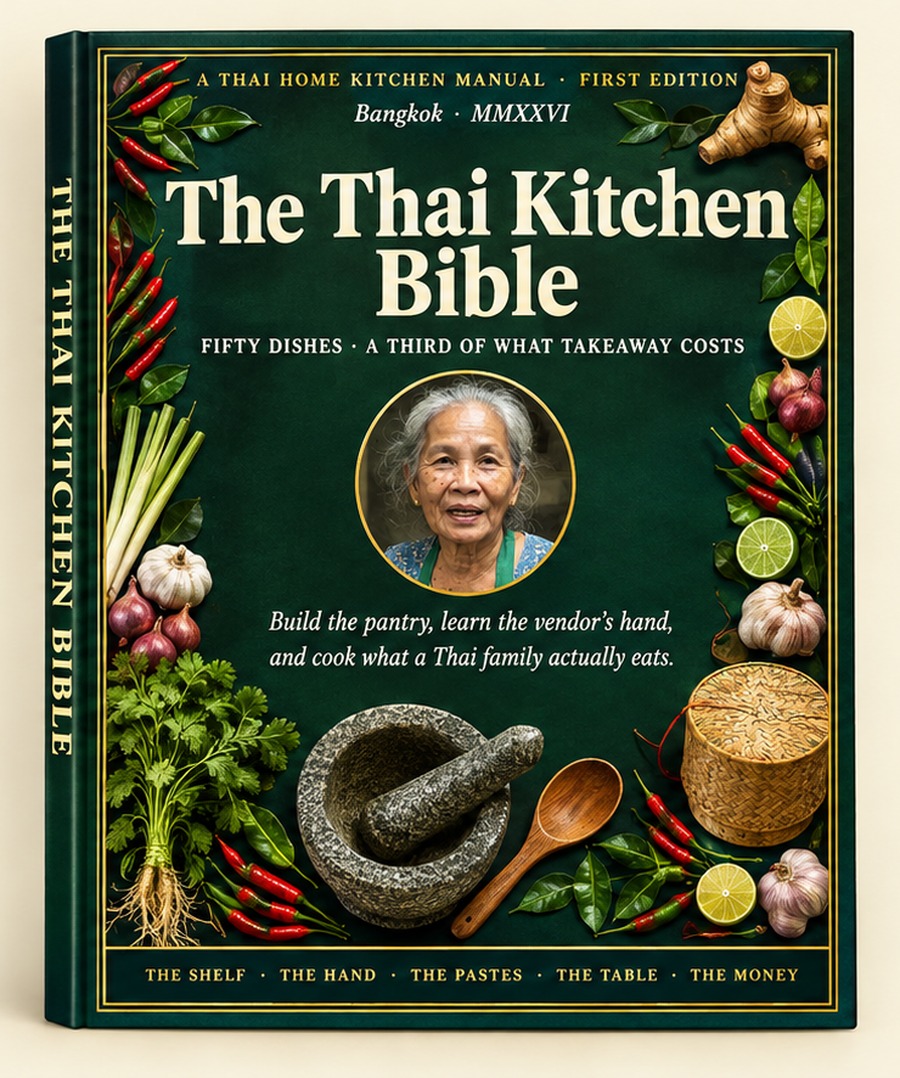
Fifty dishes a Thai family actually eats — built on a sixty-dollar shelf, a granite mortar, and a real price on every method. 150 pages, written the way one cook walks another through a task standing at their elbow.

“I cooked on a cart for eleven years. Nothing in this book needs more equipment than my mother had.”
Ploy BoonmeeWhy a paste made this morning and a paste made in a factory two years ago are not the same food.
I have watched too many careful, capable cooks spend six dollars and forty-nine cents on a jar of green curry paste that tastes of nothing, and then blame themselves when the curry comes out flat. It was never you. It was the jar. No amount of skill downstream will close that gap.
The Thai Kitchen Bible is a working kitchen manual, not a picture book. Every method in it has a real shopping list, a real price in 2026 dollars, and a real thing that happens at the end. Some of it has appeared in short pieces on my channel. Most of it goes further than the videos do. A good deal of it has never been on the channel at all.
Every chapter follows the same shape, so once you have read two of them you know where to look. The opening — what the trouble is and what we are going to do about it. What you need — a boxed list with 2026 prices from an ordinary Asian grocer. Where a brand matters, I name it; nobody pays me to name it. The method — numbered, in the order you actually do them, with the seconds given where the timing is the whole trick. What it does not do — the honest limits, what goes wrong most often, and the point at which you should stop and start again. The math — what it costs you to make, what the shop charges, and what the difference comes to over a year.
Chapters are short on purpose. You should be able to read one with your morning coffee and try it the same evening.
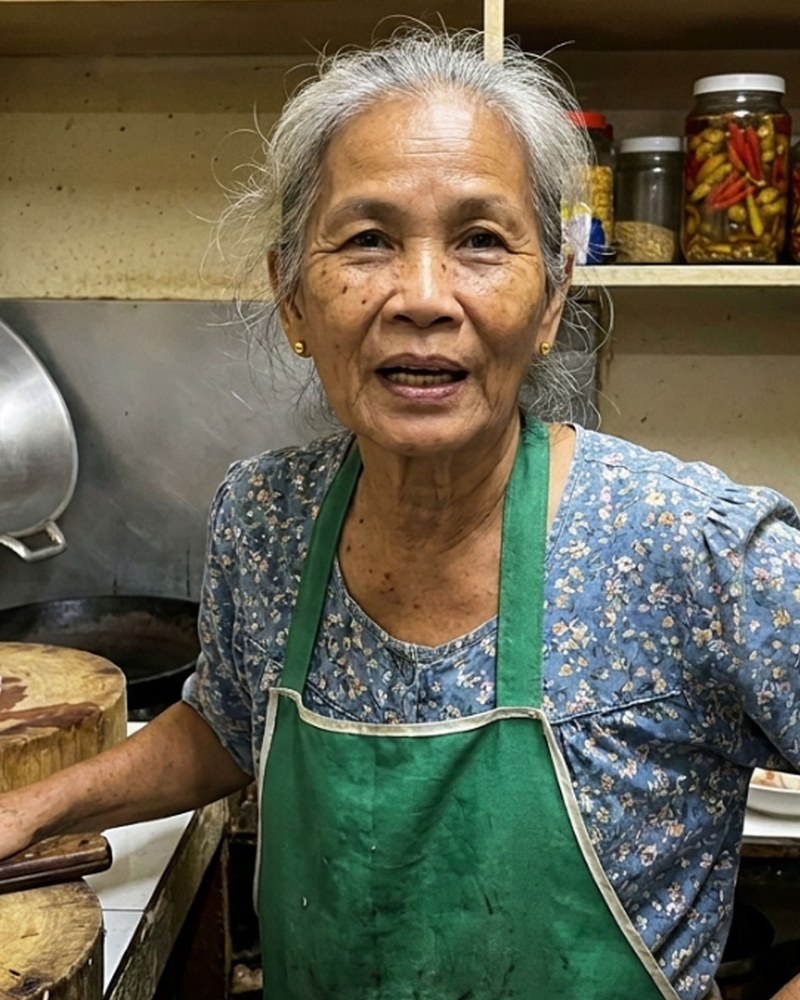
Two ways to cook the same dinner. One of them tastes like Thailand.
Read them in any order. The contents group the chapters so you can find the one that fixes whatever is bothering you most.
Five things that account for most of the distance between food that tastes vaguely Thai and food that tastes like Thailand — plus what to do if you have one hour and sixty dollars, if you have one pan and one burner, or if you already cook Thai food and it is nearly right.
From readers who put the mortar on the counter and stopped buying the jar.
“I have made green curry maybe forty times. Chapter 18 was the first time it tasted like the one I ate in Chiang Mai. Twenty minutes of learning to crack the cream. That was the whole gap.”
“The prices are what sold me. Every chapter says what it costs and what the shop charges. I did Batch Sunday twice and my Tuesday dinner is now twenty minutes and about two dollars a plate.”
“I bought the wrong fish sauce for nine years. Chapter 2 is two pages long and it improved every savoury dish in my kitchen. My husband asked what restaurant I'd ordered from.”
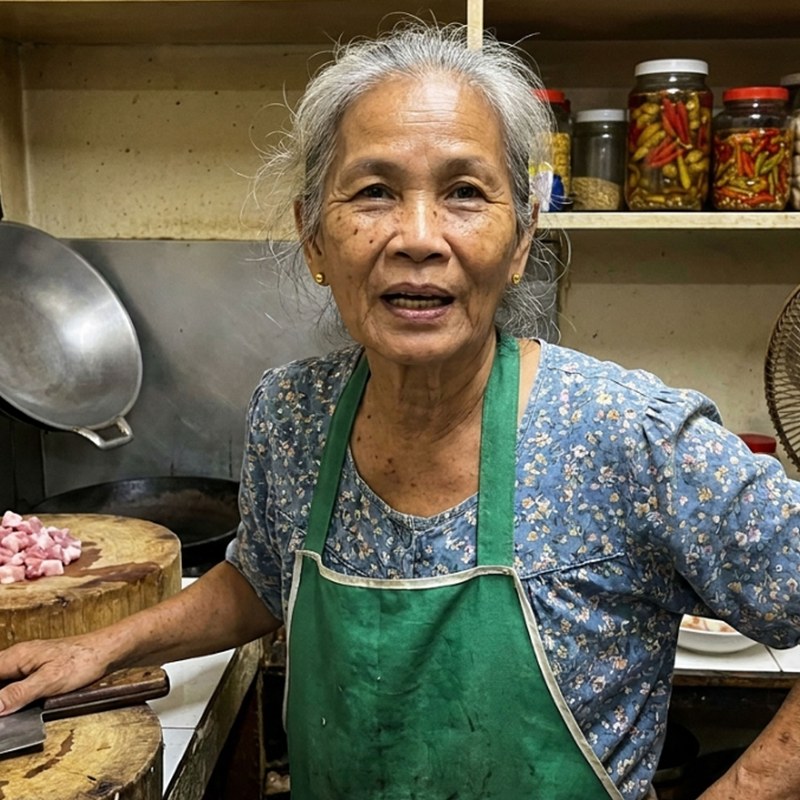
My name is Ploy Boonmee. I am from Nonthaburi, north of Bangkok, and I have spent my life in kitchens that were smaller than the one you are standing in.
Before I had a cart of my own I stood at my mother's elbow. That kitchen had one gas ring, one wok, one cleaver and a granite mortar that had belonged to her mother. We fed six people out of it every day, and she never once called it difficult. Then eleven years on a cart of my own, where the hard work is done before dawn so that the service is easy — which turns out to be the whole trick of weeknight Thai food, too.
I put the channel up because people kept asking the same three questions, and I wrote this book because the answers do not fit in a short video. There is nothing precious in it. Where a shortcut is honestly fine, I say so. Where a method has limits, I name them. There is no shame in a batch that goes in the bin — every cook I respect has thrown food away.
First Edition · A Thai Home Kitchen Manual · Bangkok, 2026

It is what my family eats. I have written the book at the heat a Thai family actually eats — properly hot, but not punishing — and every chapter tells you where to dial it down. Nobody will know. Where a dish has been changed for Western shopping, I say so in the chapter rather than quietly serving you something else.
Because a video is four minutes long and a curry paste is not. Some of what is here has appeared in short pieces on the channel. Most of it goes further than the videos do, and a good deal of it has never been on the channel at all — the pounding order, the sourcing sheet, the prices, the honest limits, and the math that tells you whether a method is worth your Sunday.
Because the book is about not overpaying for food, and it would be a strange thing to sell at a price that argues with itself. $27 is roughly one takeaway green curry for two. The first chapter you use pays for it, and Chapter 41 pays for it every week after that.
A 150-page PDF, delivered the moment you pay, readable on a phone, tablet or laptop and perfectly printable at home. It is yours forever, and purchasers of this edition receive future revisions at no additional cost. It is not a physical book — nothing is shipped.
Chapter 11 is written for you, and Appendix B is the substitution table — what genuinely stands in, what does not, and which of the two mail-order boxes is worth the postage. The sixty-dollar shelf in Chapter 1 is built to be ordered once and kept.
A mortar, yes, eventually — Chapter 13 tells you which one and what it should cost. A wok, no: Chapter 17 is wok heat from an ordinary stove, and Chapters 32, 38 and 25 need nothing but a hot pan, a spatula and a knife. My mother cooked all three on one gas ring for years.

That is what the whole book costs. 150 pages, 42 chapters, fifty dishes, and a real price on every method — so you stop paying $6.49 for a jar of paste that tastes of nothing.
Get the Thai Kitchen Bible — $47 $27